
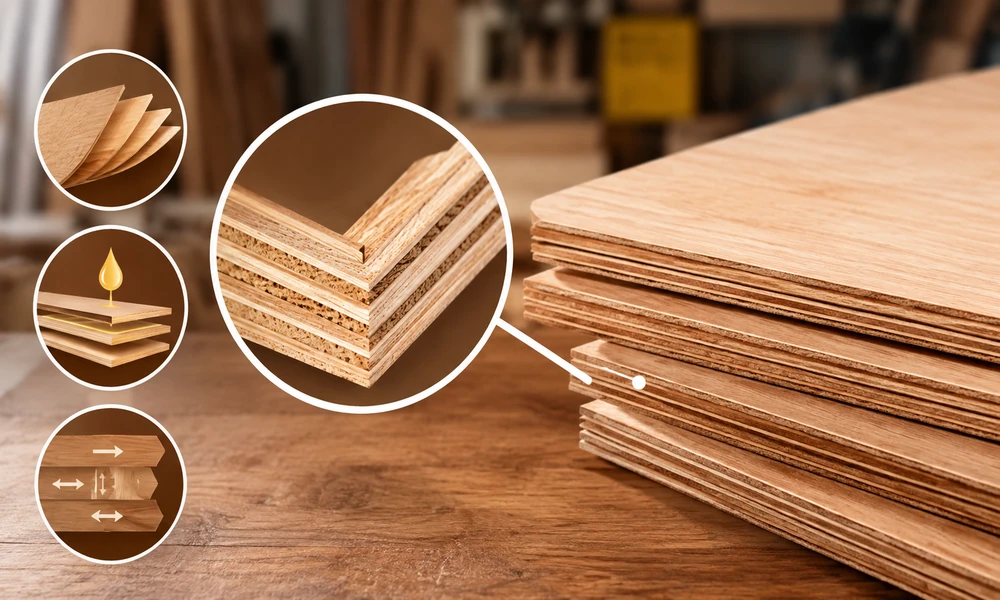
The process of producing plywood involves joining more than one component of veneer using adhesive; the quality of the core of plywood determines the durability and strength of the plywood. The outer layer of the plywood is visible and easy to evaluate, but the quality of the core of plywood is not given the required attention. Once a person knows how the core of any type of plywood is formed and the factors he or she needs to consider when choosing plywood for furniture and partitions as well as other uses, he or she will be able to choose the right kind of plywood accordingly.
What Is the Plywood Core?
The core is understood as the internal layers located between the outer veneers of plywood sheets. When all these layers are bonded properly, they make a strong and robust panel. There is no cause for doubt about plywood of good quality because veneers do not cause problems due to grain direction.
The quality of the internal layers influences the performance of plywood when it is cut, drilled, screwed, and loaded in everyday life. A wonderful outer appearance of the plywood is not enough if the quality and construction of its core is poor.
Check the Number and Arrangement of Layers
Generally, plywood consists of a lot of layers of veneer, and the arrangement of these layers in plywood will influence the overall performance of plywood. The fibres in a layer must be oriented in the right way and glued carefully without leaving gaps in the structure. The number of layers can differ based on thickness and method of construction of plywood panels, meaning it is essential to look at product specifications instead of only layer count in order to determine quality.
Look for Voids and Gaps
In terms of core construction, the number of air gaps is an essential factor. Air gaps may appear if the pieces of veneer do not fit properly or if the process of manufacturing has not been accurately performed.
Although air gaps cannot be noticed from the sheet surface, they can be evident through the edges. Large voids may weaken the structure and create weaknesses for screws, nails or any other fasteners.
Evaluate Core Bonding
The adhesive bond between different plywood layers is critical to the work of plywood. The layers should stay attached while being cut, carried or used in regular life.
Check the edges for any signs of peeling, separation, or delamination. If the layers are coming apart before installation, the sheet may need additional inspection. While plywood that is likely to be exposed to moisture should have a special adhesive and a category of wood in construction.
Understand Core Uniformity
The quality of the core is what helps plywood ensure predictable performance. The veneer surfaces must be fairly uniform in thickness and have the exact places in the sheet. Considerable variation will lead to decreased stability and more difficulties when working with the sheet. Core uniformity is important when plywood is selected for use in making parts of furniture. Poor construction techniques can have negative effects on alignment, edges, and connections, especially in large projects.
Match Core Construction to the Application
Not all plywood sheets are made the same way. Furniture pieces created for dry environments will have completely different requirements than wood used to build kitchen cabinets, bathroom cabinets, doors, or damp enclosure structures.
Factors like expected weight load, humidity levels, usage frequency and finishing conditions should be assessed before choosing plywood grade. Such companies as Royale Touche Plywood produce plywood of specific grades that fulfil certain criteria; therefore, product details should be checked, not just the picture of the plywood.
Why Core Construction Matters
Core value represents many useful characteristics of plywood. Having a properly constructed core means better screw holding, better stability, strength, and resistance to adverse conditions.
Bad core manufacturing technology will cause unexpected weak points, damaged edges, uneven surfaces, and problems during production.
What to Check Before Buying
The information about the plywood used should be checked prior to purchase. The first thing to check is whether the edges are even and there are no gaps between layers.
Also request the details about plywood grade and the purpose of the wood chosen. Prefer to buy plywood from reputable suppliers who are ready to deliver the same products of high quality throughout the whole production period.
Conclusion
By studying core value and construction, people will see the plywood not only from the outside but also from the inside. The arrangement of veneers, bonding quality, core uniformity and absence of defects will guarantee long service of plywood furniture.