
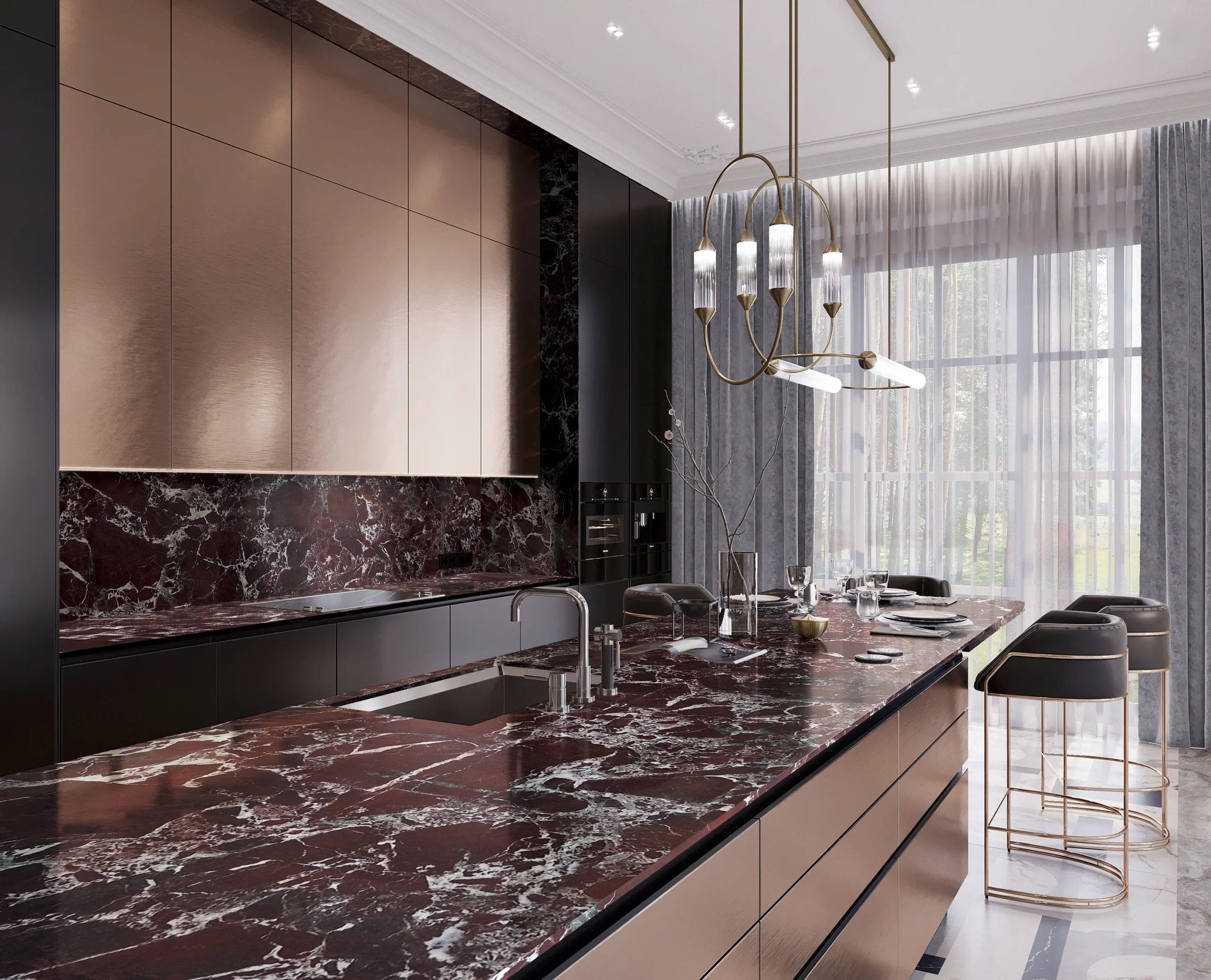
What Is Rosso Levanto Marble?
Rosso Levanto is one of Italy’s most captivating marbles, known for its deep burgundy color laced with white and green veining. Quarried primarily in the Liguria region, this stone has been cherished for centuries in both classical and modern architecture. It exudes an aura of sophistication, transforming any space into a statement of luxury.
Origins and History of Rosso Levanto
This marble takes its name from Levanto, a coastal town in Liguria, northwest Italy. The region’s rich geological layers produce marbles with intense pigmentation and unique veining. Rosso Levanto was used as early as the Renaissance period in cathedrals and noble estates, prized for its resemblance to imperial porphyry—a stone once reserved for Roman emperors.
Geological Composition and Characteristics
Rosso Levanto is technically a metamorphic limestone, composed primarily of calcite and dolomite minerals. Its striking red coloration stems from iron oxide deposits, while white and green veins occur due to variations in mineral crystallization. The result is a dense, durable marble suitable for both interior and limited exterior use.
Why Rosso Levanto Is So Unique
Rich Color Palette and Veining Patterns
Few marbles display such an intense contrast between deep red and fine white veining. Each slab tells its own story — some with dense veins that look like lightning strikes, others with soft, flowing lines reminiscent of aged leather. This natural variation makes every Rosso Levanto installation one-of-a-kind.
Symbolism and Aesthetic Appeal
The red hue symbolizes warmth, power, and passion. When used in interiors, it instantly adds depth and intimacy, especially in dimly lit spaces. Designers often describe Rosso Levanto as “dramatic elegance in stone” — bold yet timeless.
The Extraction Process: From Quarry to Slab
Mining Techniques in Liguria, Italy
Rosso Levanto is extracted from narrow mountain quarries along the Ligurian coast. Due to the challenging terrain, the process requires precision cutting and minimal environmental disruption. Italian quarrymen use diamond wire saws and water-cooled blades to ensure clean extractions and preserve the stone’s natural integrity.
Processing and Finishing Touches
Once extracted, blocks are transported to nearby processing facilities. They’re cut into slabs and polished to a glossy or honed finish. This stage enhances the marble’s red depth and white veining, revealing its full aesthetic potential.
Common Applications of Rosso Levanto Marble
Luxury Flooring and Wall Cladding
The deep tone of Rosso Levanto creates visual contrast when paired with lighter stones like Carrara or Calacatta. It’s popular for grand entryways, hotel lobbies, and luxury residences.
Kitchen Countertops and Backsplashes
When sealed properly, Rosso Levanto performs beautifully in kitchens. It’s heat-resistant, easy to maintain, and visually stunning against wooden cabinetry or brass fixtures.
Bathroom Vanities and Decorative Uses
The marble’s bold hue makes it perfect for vanity tops, shower walls, or even accent niches. Many designers use it sparingly as a statement piece to avoid overpowering small spaces.
Architectural Landmarks Featuring Rosso Levanto
You’ll find this stone in several historic churches and civic buildings across Europe. It’s also seen in modern hotels and luxury boutiques that aim to blend classical style with contemporary flair.
Interior Design Inspiration: Styling with Rosso Levanto
Pairing with Neutral Tones and Textures
Rosso Levanto shines when balanced with softer materials — think beige limestone, oak wood, or matte black metal. This contrast brings harmony to its bold palette.
Lighting and Accents for Deep Red Marble
Proper lighting enhances its veining and depth. Warm LED or diffused natural light prevents harsh reflections and highlights the marble’s velvety texture.
Combining with Other Natural Stones
Designers often mix Rosso Levanto with green marble (Verde Alpi) or white Carrara for a classic Italian combination — rich, balanced, and refined.
Maintenance and Care Tips for Rosso Levanto
Cleaning and Sealing Recommendations
Use pH-neutral stone cleaners to preserve its finish. A penetrating sealer should be applied every 6–12 months to protect from stains and moisture.
Preventing Stains and Etching
Avoid acidic substances like lemon juice or vinegar. Use coasters and placemats to reduce direct contact with liquids.
Long-Term Preservation Techniques
Polishing can restore luster after years of use. For scratches or dull spots, professional re-honing can bring the surface back to life.
Rosso Levanto vs Other Red Marbles
Comparison with Rosso Verona and Rosso Alicante
Rosso Verona has an orange-red tone, while Rosso Alicante leans toward terracotta with fine white veins. Rosso Levanto, in contrast, is darker and more dramatic — making it ideal for luxurious, moody interiors.
Durability, Price, and Visual Contrast
While slightly softer than granite, Rosso Levanto remains durable for indoor use. It’s considered a mid-to-high-range marble, with pricing depending on vein density and polish quality.
Sustainable Quarrying and Environmental Considerations
Responsible Extraction Practices
Italian quarries follow strict environmental regulations. Waste materials are minimized and often repurposed for architectural aggregates or artistic applications.
Eco-Friendly Alternatives and Certifications
Buyers can look for suppliers certified under ISO 14001 for sustainable quarry management. Some composite stones also mimic Rosso Levanto’s look with a lower carbon footprint.
Buying Guide: What to Know Before Purchasing
Grades, Finishes, and Price Range
Rosso Levanto is available in polished, honed, or brushed finishes. Expect prices between $80–$150 per square foot, depending on quality and slab size.
Authenticity Checks and Supplier Selection
Choose reputable Italian exporters or distributors who provide quarry certificates. Always inspect slabs in natural light before purchase to ensure desired color intensity.
FAQs About Rosso Levanto Marble
1. Is Rosso Levanto suitable for kitchen countertops?
Yes, with proper sealing and care, it performs well for countertops due to its density and resistance to heat.
2. Does Rosso Levanto work outdoors?
It’s best suited for interiors. Constant exposure to sunlight or rain may cause fading over time.
3. How often should I reseal the surface?
Every 6–12 months, depending on usage and exposure to moisture.
4. Can Rosso Levanto be paired with modern design styles?
Absolutely. It adds contrast and sophistication in minimalist or industrial interiors.
5. What’s the difference between marble and granite in maintenance?
Marble is more porous, so it requires more frequent sealing, while granite is slightly more resistant to stains and scratches.
6. Where can I find authentic Rosso Levanto marble?
Look for trusted Italian suppliers or certified distributors such as Marmi Rossi.
Conclusion: Why Rosso Levanto Remains an Icon of Timeless Luxury
Rosso Levanto marble embodies Italian artistry at its finest — rich, bold, and enduring. Whether featured in a luxurious lobby or a minimalist bathroom, it commands attention without shouting. Its deep red hue, intricate veining, and cultural heritage make it a timeless favorite for architects and homeowners who value sophistication that never goes out of style.